
News & Updates
Steel industry trends, company news & latest policies
Stainless Steel Plate Grades Compared for Corrosion Resistance
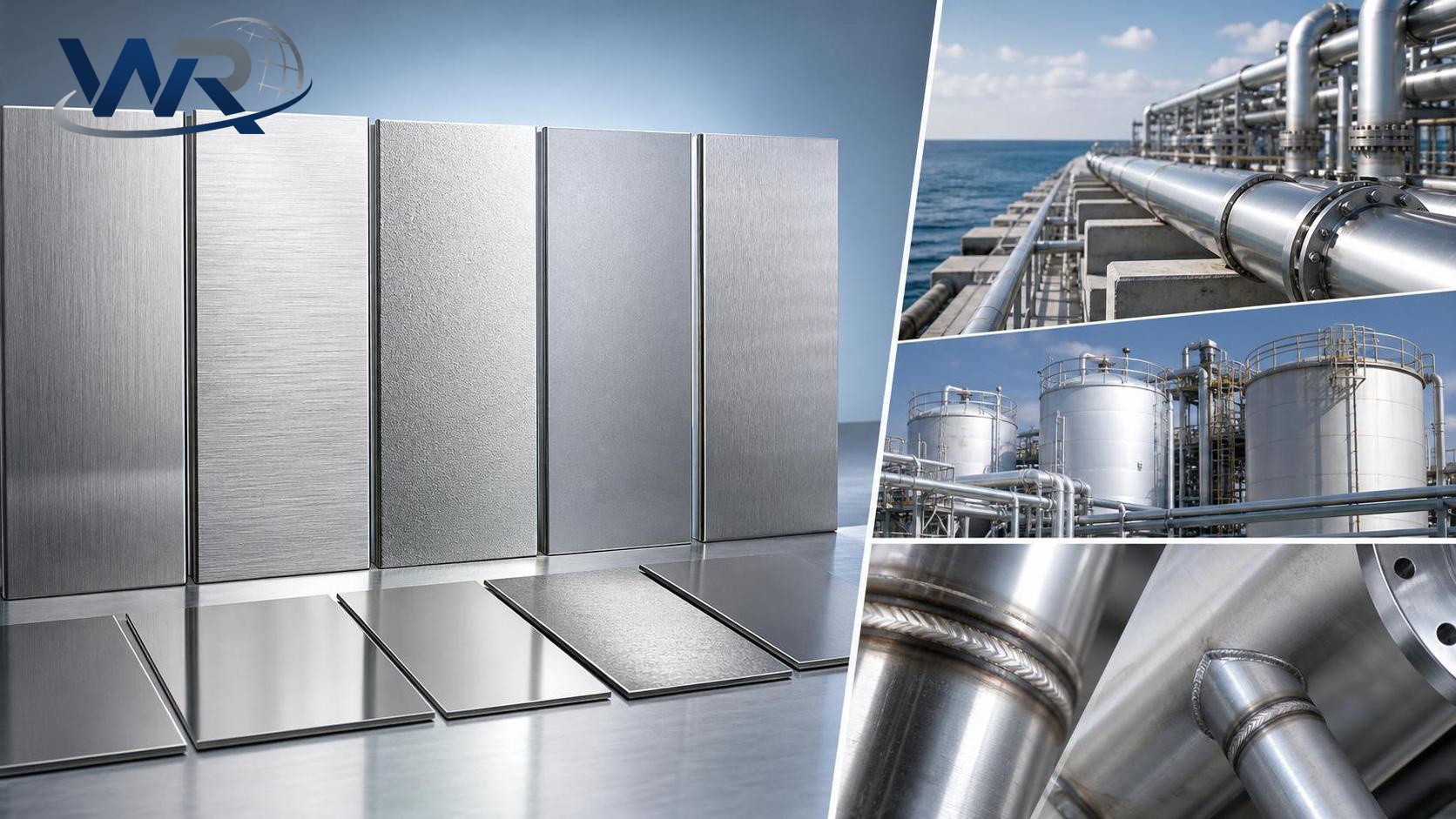
Stainless Steel Plate Grades Compared for Corrosion Resistance
Choosing the right Stainless Steel Plate grade affects service life, inspection frequency, shutdown risk and long-term compliance.
That matters even more in chloride-rich, humid, acidic or mixed industrial environments.
A plate that looks acceptable on paper may still fail early if its corrosion limits are misunderstood.
In practice, corrosion resistance depends on alloy chemistry, surface condition, fabrication quality and real exposure conditions.
This comparison focuses on mainstream Stainless Steel Plate grades used in structural, process and storage applications.
The goal is simple: make grade selection more predictable and reduce avoidable material risk.
Why Corrosion Resistance Varies Between Grades
Not all Stainless Steel Plate products resist corrosion in the same way.
Chromium creates the passive film, but nickel, molybdenum and carbon also change performance.
Higher molybdenum usually improves pitting and crevice corrosion resistance in chloride service.
Lower carbon helps after welding because it reduces sensitization and intergranular attack.
Surface finish also matters. Rougher surfaces trap deposits and moisture more easily.
This is why a Stainless Steel Plate grade cannot be judged only by nominal composition.
Main Stainless Steel Plate Grades in Corrosive Service
The most common comparison starts with 304, 304L, 316, 316L and duplex families.
Each Stainless Steel Plate grade suits different risk levels, fabrication routes and operating environments.
304 Stainless Steel Plate
304 is widely used because it offers balanced cost, formability and general corrosion resistance.
It performs well in indoor equipment, food processing and mild atmospheric exposure.
Its limitation appears in chloride environments, especially where deposits remain wet for long periods.
For coastal structures or chemical splash zones, 304 Stainless Steel Plate often lacks enough pitting resistance.
304L Stainless Steel Plate
304L has similar general corrosion behavior but lower carbon content.
That makes it a better Stainless Steel Plate choice for welded tanks, ducts and fabricated assemblies.
When welding is extensive, 304L usually offers a safer margin against weld decay.
316 and 316L Stainless Steel Plate
316 includes molybdenum, which improves resistance to chlorides and many industrial chemicals.
This is why 316 Stainless Steel Plate is common in marine fittings, pharmaceutical equipment and process vessels.
316L adds lower carbon for improved welded performance, especially in thicker fabricated sections.
For many buyers, 316L Stainless Steel Plate becomes the practical default when corrosion uncertainty is high.
Duplex Stainless Steel Plate
Duplex grades combine high strength with stronger chloride resistance than standard austenitic grades.
They are often selected for offshore, desalination, pressure-containing and aggressive water systems.
However, duplex Stainless Steel Plate requires tighter control during welding and heat input management.
So the material may perform better, but execution must also be stronger.
Quick Comparison by Corrosion Risk
Where Corrosion Failure Usually Starts
Many Stainless Steel Plate failures begin at details, not across the whole surface.
Typical weak points include weld toes, bolted joints, lap areas, stagnant corners and damaged passivation zones.
Chloride deposits combined with poor drainage can trigger pitting even on relatively resistant grades.
That is why material review should always include design, fabrication and cleaning conditions.
- Check whether the Stainless Steel Plate will face splash, immersion or salt mist.
- Confirm if welding, grinding or thermal cutting will alter the surface condition.
- Review cleaning chemicals, temperature cycles and downtime moisture retention.
- Look for crevice-forming details before approving the final grade.
How to Select the Right Stainless Steel Plate
A good selection process starts with the actual corrosion mechanism, not only the purchase price.
For light indoor exposure, 304 or 304L Stainless Steel Plate may be enough.
For coastal, chemical or washdown duty, 316L often gives a more dependable balance.
For high chlorides, stress risk or long design life, duplex may justify the higher control requirements.
- Define the medium: water, vapor, acid, alkali, food process fluid or mixed contamination.
- Measure chloride level, temperature and contact duration.
- Confirm whether the Stainless Steel Plate will be welded, cut, bent or polished.
- Match the grade to inspection intervals, design life and shutdown cost.
- Review mill certificates, surface finish and traceability before release.
Common Specification and Procurement Mistakes
One common mistake is specifying 304 Stainless Steel Plate for any corrosive environment without checking chlorides.
Another is selecting a suitable grade but ignoring surface contamination after fabrication.
Mixed storage with carbon steel can embed iron and create rust staining that misleads inspections.
It is also risky to approve a Stainless Steel Plate order without verifying thickness tolerance and heat traceability.
In actual projects, material reliability depends as much on supply discipline as on grade selection.
Supply Stability Matters Too
When the correct Stainless Steel Plate grade is identified, delivery capability becomes the next control point.
Shandong Wanruitong Steel Co., Ltd. produces full-range steel products for global industrial buyers.
Its facility covers 32,000 square meters with 8 automatic rolling and deep processing production lines.
CNC cutting and precision leveling support custom Stainless Steel Plate processing with tighter execution control.
Standard specifications are supported by 10,000 tons of ready stock with delivery within 7 working days.
Customized orders are typically scheduled within 15 to 25 days through a mature production system.
For bulk procurement or urgent replenishment, that consistency reduces planning pressure and material gaps.
Final Selection Takeaway
There is no single best Stainless Steel Plate grade for every environment.
304 and 304L work well in mild service, but their chloride tolerance is limited.
316 and 316L offer a stronger answer for coastal and chemical exposure.
Duplex Stainless Steel Plate stands out where chloride severity, strength demand and lifecycle risk are higher.
The practical way forward is to match grade, fabrication route, finish and delivery control to the real service conditions.
That approach makes Stainless Steel Plate selection more defensible, more durable and easier to manage over time.
Related Posts
- ▶ Carbon Steel Pipe Standards Explained: ASTM, API, and Common Gaps
- ▶ How to Judge Steel Plates by Flatness, Tolerance, and Surface Quality
- ▶ Steel Pipes for Water, Gas, and Fire Systems: Key Differences
- ▶ Reinforcing Steel Bar Mistakes That Lead to Site Delays
- ▶ One-Stop Steel Distribution or Multi-Supplier Buying: Cost and Risk
- ▶ Steel Sections vs Plate Fabrication: Which Is More Efficient?
Send Us A Message