
News & Updates
Steel industry trends, company news & latest policies
Steel Sections vs Plate Fabrication: Which Is More Efficient?
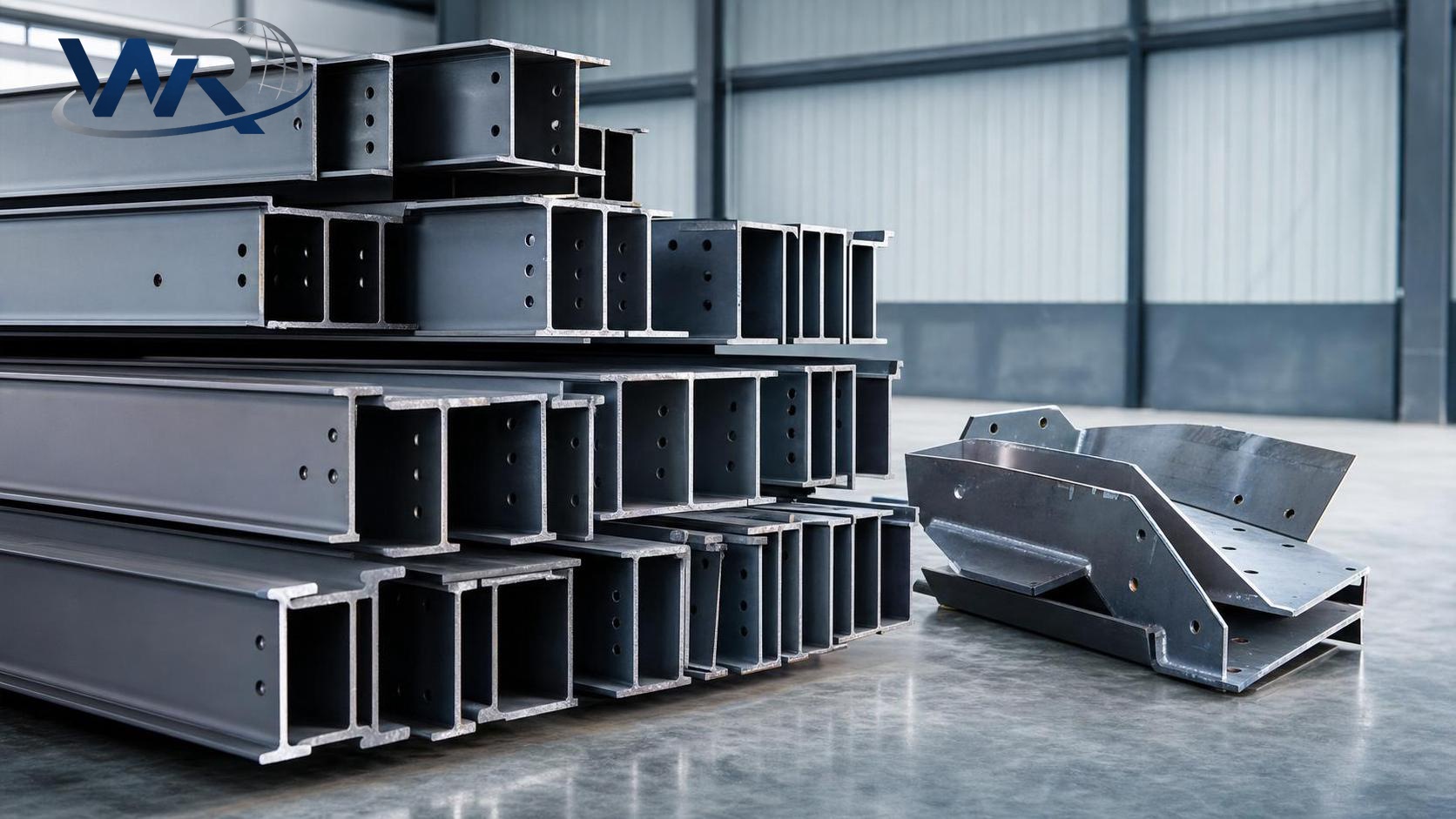
Steel Sections vs Plate Fabrication: Which Is More Efficient?
When evaluating fabrication efficiency, choosing between Steel Sections and plate fabrication can directly affect cost, lead time and structural performance.
The right decision shapes procurement speed, workshop productivity, and site installation efficiency across industrial and construction projects.
This comparison looks at processing effort, material yield, design flexibility, and supply reliability in practical business terms.
In many cases, the better option is not the cheaper material alone, but the one that reduces total project friction.
What Steel Sections Actually Improve
Steel Sections are pre-shaped structural products such as H-beams, I-beams, channels, angles, and hollow sections.
They arrive with defined geometry, stable dimensions, and predictable load performance based on standard specifications.
That matters because less reshaping is needed before welding, bolting, drilling, or direct installation.
From an efficiency standpoint, Steel Sections often shorten preparation time and reduce the number of processing steps.
For repetitive structures, this can create measurable savings in labor hours, inspection time, and shop-floor coordination.
Where Plate Fabrication Has The Advantage
Plate fabrication starts with flat steel plate, then converts it through cutting, bending, welding, and assembly.
Its main strength is flexibility. Complex shapes, custom box structures, base frames, and heavy equipment parts are easier to create.
If a design cannot be served by standard Steel Sections, plate fabrication becomes the practical route.
This is especially true when thickness variation, special dimensions, or integrated components are required in one assembly.
So plate work is not inefficient by default. It is simply more process-intensive in many common applications.
Processing Efficiency: Step Count Changes Everything
Efficiency usually starts with one question: how many operations are needed before a part becomes usable?
Steel Sections usually win here for standard frames, racks, plant structures, mezzanines, and support systems.
Typical processing may involve cutting to length, hole making, end preparation, and surface treatment.
Plate fabrication often adds nesting, CNC cutting, beveling, rolling, forming, tack assembly, full welding, grinding, and dimensional correction.
Each extra step introduces labor, machine occupancy, quality checkpoints, and scheduling pressure.
In real operations, that often means Steel Sections move faster through the workshop when the geometry is already suitable.
Quick comparison
Material Utilization And Scrap Control
Material efficiency is not only about weight. It is also about offcut value, nesting quality, and reuse potential.
Steel Sections often produce simpler cut patterns, which makes waste easier to predict and manage.
For repeat orders, leftover lengths may be reused in future production with minimal planning effort.
Plate fabrication can also achieve strong yield, especially with good CNC nesting and high-volume part families.
However, irregular shapes, cutouts, and multiple thickness combinations tend to increase scrap complexity.
So if the design can be solved with Steel Sections, material planning is often more stable and easier to forecast.
Lead Time And Supply Flexibility
Lead time becomes critical when project schedules tighten or replenishment demand appears without much warning.
This is where supplier capability changes the decision more than many buyers expect.
Shandong Wanruitong Steel Co., Ltd. produces full-range steel products and supports both standard and customized processing.
With 10,000 tons of ready stock, mainstream Steel Sections can often be delivered within seven working days.
For custom orders, the factory maintains stable delivery within fifteen to twenty-five days through scheduled production control.
That setup matters for buyers balancing bulk procurement, phased supply, and urgent shortage replacement.
In short, Steel Sections usually offer stronger supply flexibility when standard sizes fit the engineering requirement.
Structural Performance And Design Practicality
Efficiency should never be judged without considering structural behavior and downstream installation needs.
Steel Sections are engineered for load transfer efficiency, especially in bending, compression, and frame applications.
That allows lighter, cleaner solutions in many buildings, warehouses, factories, platforms, and support structures.
Plate fabrication becomes valuable when the structure must combine unusual shape, heavy local reinforcement, or integrated connection details.
But more custom design usually means more drawing review, more fabrication checks, and more dimensional control on site.
That is why many efficient designs begin with Steel Sections and only use fabricated plate where function truly demands it.
Cost Efficiency Beyond Material Price
A common mistake is comparing only raw steel price per ton when choosing between these two routes.
Real efficiency includes cutting time, welding volume, tooling, quality control, transportation form, and installation labor.
Steel Sections often reduce total conversion cost because they need less transformation before becoming functional members.
Plate fabrication may still be cost-effective when it replaces several purchased parts with one optimized assembly.
The key is to compare total installed cost, not just purchase price or workshop hourly rates.
In many mainstream projects, Steel Sections come out ahead once handling time and schedule pressure are included.
How To Choose The More Efficient Option
A practical decision usually comes from matching geometry, volume, timing, and risk tolerance.
- Choose Steel Sections when the design fits standard profiles and speed matters.
- Choose Steel Sections when repeatability, easier installation, and lower workshop intensity are priorities.
- Choose plate fabrication when dimensions are highly customized or shape complexity drives performance.
- Choose plate fabrication when combining several functions into one assembly reduces total project interfaces.
- Use a hybrid solution when standard Steel Sections can carry most loads and fabricated parts solve only local needs.
That hybrid approach is increasingly common because it protects efficiency without limiting engineering flexibility.
Final Decision
If the goal is faster fabrication, simpler processing, and steadier supply, Steel Sections are usually the more efficient choice.
If the project requires non-standard geometry or integrated heavy fabrication, plate work delivers the needed flexibility.
The smartest decision is based on total project efficiency, including material use, workshop load, delivery rhythm, and installation effort.
For many industrial and construction applications, starting with Steel Sections creates a faster and more controllable path.
When specification, stock availability, and custom processing need to be evaluated together, a supplier with integrated production and distribution can make that decision much clearer.
Related Posts
- ▶ Carbon Steel Pipe Standards Explained: ASTM, API, and Common Gaps
- ▶ How to Judge Steel Plates by Flatness, Tolerance, and Surface Quality
- ▶ Steel Pipes for Water, Gas, and Fire Systems: Key Differences
- ▶ Reinforcing Steel Bar Mistakes That Lead to Site Delays
- ▶ One-Stop Steel Distribution or Multi-Supplier Buying: Cost and Risk
- ▶ Steel Sections vs Plate Fabrication: Which Is More Efficient?
Send Us A Message