
News & Updates
Steel industry trends, company news & latest policies
Carbon Steel Pipe Standards Explained: ASTM, API, and Common Gaps
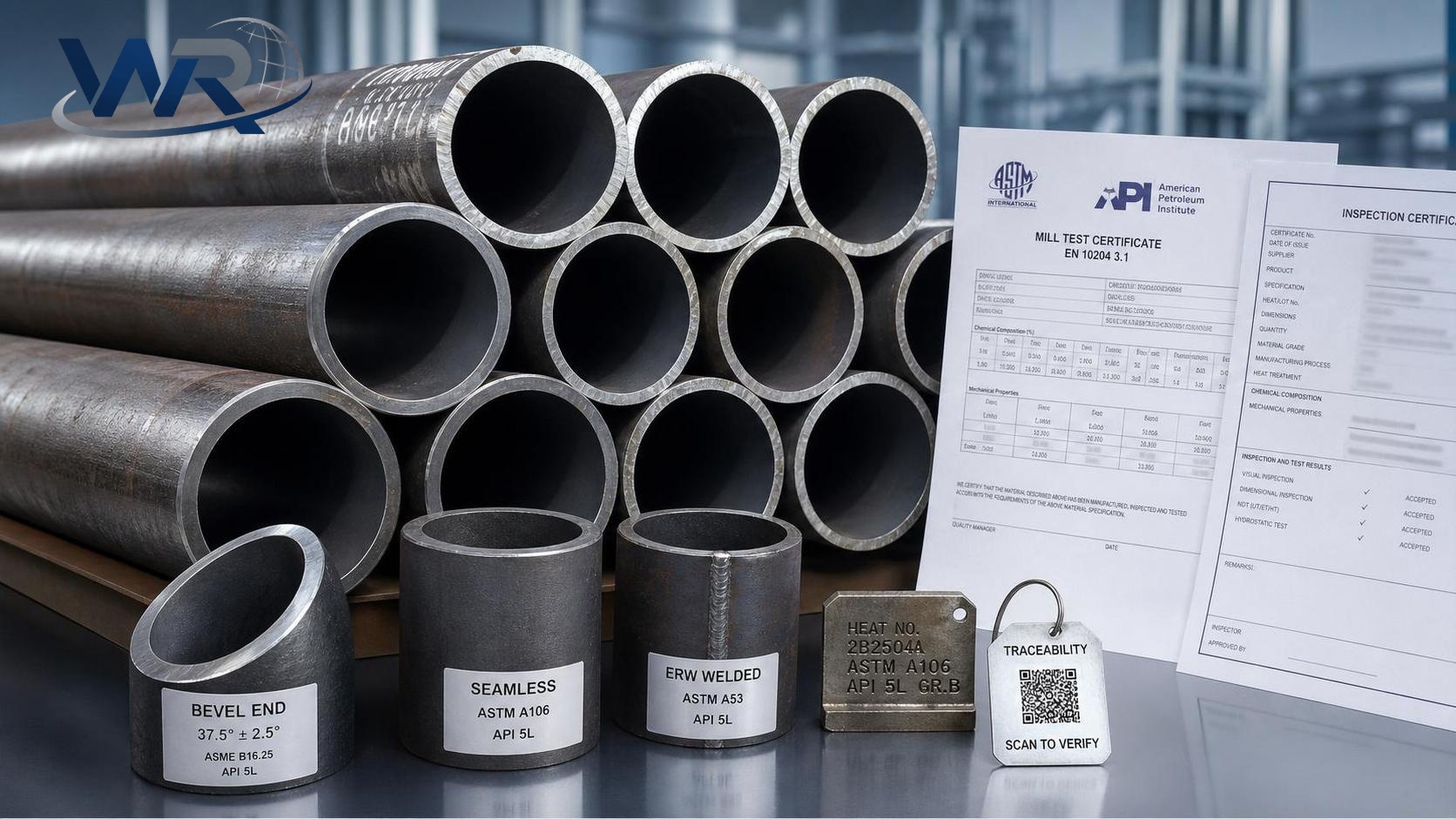
Why do Carbon Steel Pipe standards create so much confusion?
Choosing a Carbon Steel Pipe is rarely just about size and price.
The real challenge begins when ASTM, API, project specifications, and local codes all appear in the same document set.
At first glance, many grades look interchangeable. In practice, they are not always equal in testing, chemistry, traceability, or intended service.
That is where sourcing mistakes happen. A pipe may match dimensions, yet still fail a compliance review or site inspection.
For industrial lines, structural use, pressure systems, or energy transport, understanding Carbon Steel Pipe standards helps reduce delay, rework, and approval risk.
A practical review should look beyond the grade name. It should confirm manufacturing route, mechanical properties, inspection scope, and delivery condition.
ASTM and API sound similar, but what do they actually control?
ASTM standards usually define material requirements, dimensions, tolerances, chemistry, and mechanical performance for broad engineering use.
Common examples include ASTM A53, ASTM A106, and ASTM A333.
These are often selected for building services, general industrial piping, pressure service, and low-temperature applications.
API standards, especially API 5L, are more closely linked to pipeline transmission service.
They focus on line pipe for oil, gas, water, and related transport systems, where process control and documentation are usually stricter.
Simple wording can help here: ASTM often answers, “What material should this be?” API more often answers, “How should this pipe perform in pipeline service?”
That does not mean ASTM is lower level. It means the standards are written around different application logic.
A Carbon Steel Pipe for steam service may fit ASTM better. A transmission line project may require API from the start.
A quick comparison helps
This table is only a starting point. The actual project note often carries more weight than the standard title alone.
When can one Carbon Steel Pipe grade replace another?
This is one of the most common search questions, and the safest answer is: only after a full requirement check.
Equivalent strength does not automatically mean equivalent acceptance.
For example, ASTM A106 Grade B and API 5L Grade B may look close in basic strength ranges.
Still, they can differ in testing method, impact requirements, marking, and document expectations.
More importantly, the end-use code may name a standard directly. If the spec says API 5L PSL2, a similar ASTM grade is usually not enough.
In actual applications, substitution becomes easier when the service is non-critical and the approval path is clear.
It becomes harder when the pipe enters high-pressure, low-temperature, sour service, or regulated transmission systems.
- Check whether the required standard is named by contract or by performance.
- Compare chemistry, tensile values, hydrotest, NDT, and heat treatment.
- Review whether supplementary requirements apply.
- Confirm mill test certificate format and traceability level.
Without that review, a cheaper Carbon Steel Pipe can become the more expensive option after rejection.
Where do the most common gaps appear in ASTM and API pipe orders?
The biggest gaps usually appear in places that are easy to overlook during quotation.
Nominal grade is only one part of the order. Several other details decide whether the delivered Carbon Steel Pipe is acceptable.
The usual trouble points
- PSL1 versus PSL2 in API 5L. The difference is not minor. Testing and quality control become tighter.
- Seamless versus ERW. Some standards allow both, but project documents may not.
- End condition, such as plain end, beveled end, or threaded end.
- Dimensional series, especially schedule, wall tolerance, and length range.
- Impact testing or low-temperature performance requirements.
- Coating, black finish, galvanizing, or additional processing after rolling.
Another gap appears between stock availability and specification completeness.
Standard stock can ship fast, but only if the stock fully matches the technical note.
For that reason, experienced suppliers often ask more questions before confirming lead time.
A manufacturer with rolling, cutting, leveling, and processing capacity can usually handle these gaps more cleanly than a pure trading channel.
How should you choose the right Carbon Steel Pipe for a real project?
A practical selection process starts with service conditions, not with price.
Ask what the pipe will carry, at what pressure, at what temperature, and under which code environment.
Then check whether the project needs standard stock, cut-to-length supply, or further processing.
That sequence avoids a common problem: finding a low-cost Carbon Steel Pipe first, then discovering it lacks the required documentation or tolerance control.
A simple decision table
This is also where supply capability matters.
For standard specifications, stable stock can shorten procurement cycles significantly.
For non-standard Carbon Steel Pipe orders, integrated production and processing usually make schedule control more reliable.
What should be checked before placing the order?
Before release, the order should read like a technical instruction, not a rough inquiry.
That is especially important when the pipe will be reviewed by third-party inspection, EPC documentation, or local code authorities.
- Standard, grade, edition, and supplementary requirements.
- Outside diameter, wall thickness, schedule, length, and quantity.
- Manufacturing method and delivery condition.
- Required documents, including MTC, heat number traceability, and inspection records.
- Processing needs such as CNC cutting, beveling, or surface treatment.
- Expected lead time for stock supply or made-to-order production.
In real supply chains, timing is part of technical planning.
A producer with ready stock for mainstream sizes can often ship within days.
When customization is needed, a mature scheduling system helps keep delivery within a predictable window instead of creating open-ended delays.
That balance between stock depth and processing capacity is often more valuable than a low initial quote.
So what is the most practical takeaway?
Carbon Steel Pipe standards are not confusing because there are too many names.
They become confusing when application, testing, and documentation details are assumed instead of confirmed.
ASTM and API each serve clear purposes, but the gaps between them matter in real procurement.
A sound decision usually comes from matching service conditions, required compliance level, and supply capability at the same time.
Before sourcing, organize the exact standard, grade, manufacturing route, testing scope, and delivery expectations into one checklist.
Then compare offers based on technical fit, lead time, and processing support, not just unit price.
That approach makes Carbon Steel Pipe selection more predictable and reduces the chance of costly specification gaps later.
Related Posts
- ▶ Carbon Steel Pipe Standards Explained: ASTM, API, and Common Gaps
- ▶ How to Judge Steel Plates by Flatness, Tolerance, and Surface Quality
- ▶ Steel Pipes for Water, Gas, and Fire Systems: Key Differences
- ▶ Reinforcing Steel Bar Mistakes That Lead to Site Delays
- ▶ One-Stop Steel Distribution or Multi-Supplier Buying: Cost and Risk
- ▶ Steel Sections vs Plate Fabrication: Which Is More Efficient?
Send Us A Message