
News & Updates
Steel industry trends, company news & latest policies
One-Stop Steel Distribution or Multi-Supplier Buying: Cost and Risk
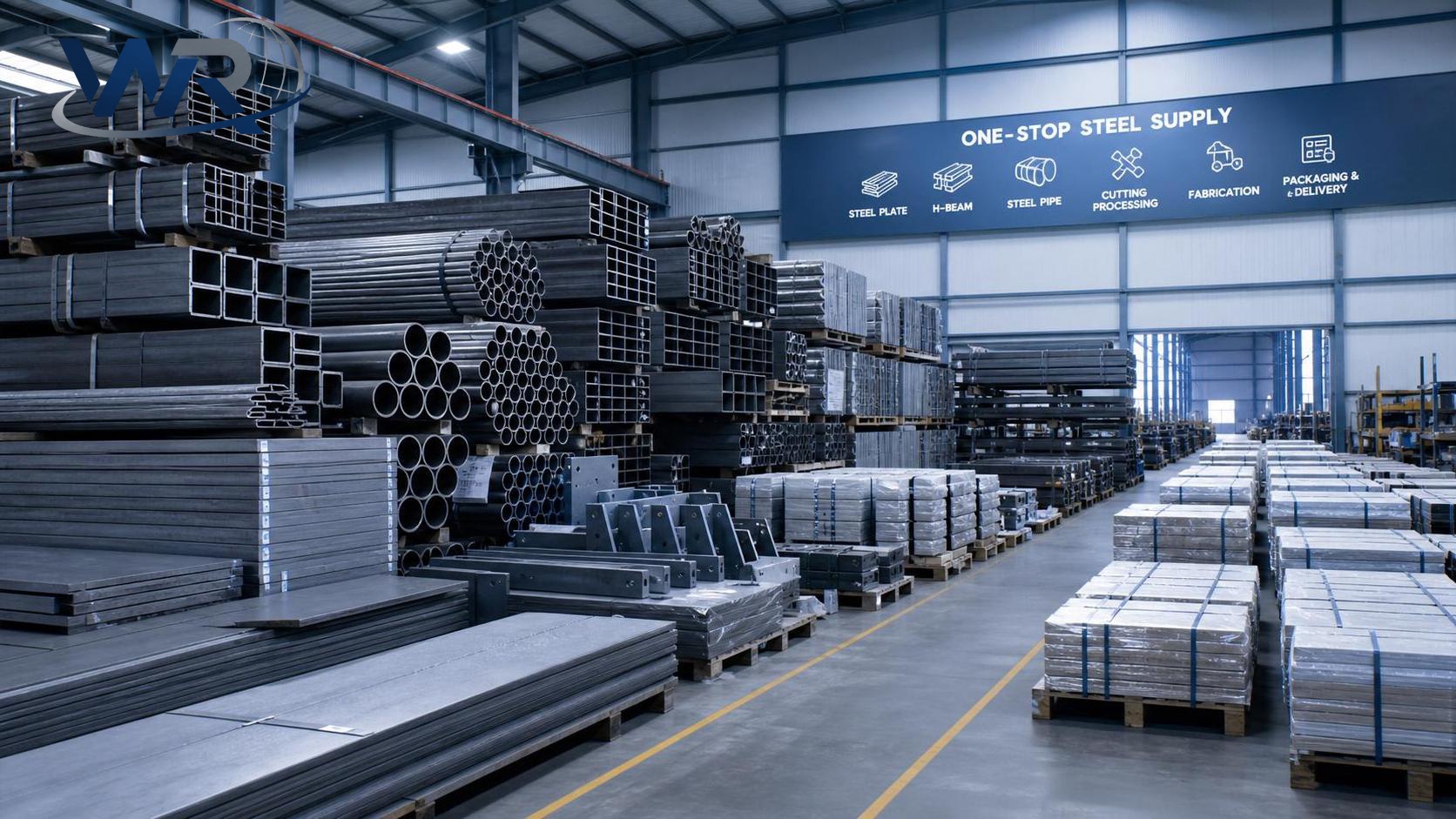
One-Stop Steel Distribution or Multi-Supplier Buying: Cost and Risk
For sourcing teams and commercial evaluators, choosing between One-Stop Steel Distribution and multi-supplier buying directly affects total cost, delivery reliability and operational risk.
This decision is rarely about unit price alone. It shapes planning speed, stock visibility, rework exposure, and how fast a project can respond when schedules change.
In steel procurement, the cheapest quote can still become the most expensive option after freight splits, coordination delays, inconsistent tolerances, and missed delivery windows.
That is why One-Stop Steel Distribution is receiving more attention. Buyers want fewer handoffs, clearer accountability, and steadier supply across multiple product categories.
The better model depends on volume mix, processing needs, urgency, and internal control capacity. A practical comparison makes the trade-offs much easier to judge.
What One-Stop Steel Distribution Actually Changes
One-Stop Steel Distribution means one supplier manages several steel categories, related processing, shipment planning, and often document coordination under one procurement framework.
Instead of buying sections from one mill, pipes from another, and plates from a trader, procurement is centralized through a single operational channel.
This does not automatically guarantee lower piece prices. It usually changes the cost structure by reducing hidden expenses around time, matching, communication, and disruption.
In actual business, that distinction matters more than many buyers expect, especially on projects with mixed specifications and staggered demand releases.
Direct Cost: Price Tags Versus Total Procurement Cost
Multi-supplier buying can look attractive during quotation comparison. Individual suppliers may offer sharper prices on a few hot-selling sizes or specific standard grades.
That advantage is real when the purchase list is simple and stable. It becomes less clear when procurement includes many items, custom cutting, or delivery sequencing.
One-Stop Steel Distribution often reduces total landed cost through bundled logistics, lower document handling effort, and fewer small-lot freight premiums.
It also lowers the internal cost of vendor qualification, order follow-up, dispute handling, and invoice reconciliation. Those costs are easy to underestimate because they sit across departments.
From recent market behavior, buyers increasingly evaluate cost by package outcome, not by one SKU alone. That is a more reliable method for steel sourcing decisions.
- Multi-supplier buying may lower visible unit prices on selected items.
- One-Stop Steel Distribution can lower transaction and coordination cost.
- Bundled shipping often improves freight efficiency across mixed steel products.
- Fewer counterparties usually means less administrative overhead.
Delivery Control and Inventory Coordination
Delivery reliability is where procurement models separate more clearly. Steel projects rarely fail because one item is unavailable. They fail because several items stop matching the schedule.
With multi-supplier buying, every vendor follows a different production rhythm, stock logic, and dispatch capacity. Small delays then spread across fabrication and site installation.
One-Stop Steel Distribution improves synchronization. One supply partner can align sections, plates, pipes, and processed materials around the same shipment and project milestone.
This also helps inventory control. Buyers do not need to overstock one category simply because another supplier cannot confirm timing with enough confidence.
A supplier with ready stock and processing capacity creates more room for urgent replenishment, which is critical when project consumption moves faster than the original estimate.
Customization and Processing Consistency
For standard commodity steel, the supply model may seem secondary. Once cutting, leveling, tolerance control, or batch-specific packaging are involved, consistency becomes a cost issue.
Multi-supplier buying can increase variation between batches. Even when standards match on paper, processing details and quality interpretation often differ in practice.
One-Stop Steel Distribution gives buyers a better chance to keep processing instructions, labeling rules, and acceptance criteria under one operational system.
That means fewer site-side sorting errors, less rework during assembly, and faster receiving inspection. The savings often appear after goods arrive, not before they ship.
A manufacturer with integrated production and deep processing is especially valuable when projects require both mainstream specifications and customized dimensions in the same order cycle.
Risk Exposure: Accountability, Quality and Supply Stability
Cost decisions should always be tested against risk. In steel sourcing, the main risks are quality deviation, shipment delay, missing documents, and weak response during urgent changes.
Multi-supplier buying spreads supply sources, which can reduce dependence on one partner. That is useful when category demand is highly volatile or regionally fragmented.
However, it also spreads accountability. When problems arise, root-cause tracking becomes slower because quality, processing, packaging, and delivery are divided across companies.
One-Stop Steel Distribution concentrates responsibility. That simplifies communication and usually shortens the path from issue discovery to corrective action.
The key condition is supplier capability. A one-stop partner must have real production depth, stable stock, processing equipment, and scheduling discipline, not just trading coverage.
This is where operational facts matter. Factory scale, ready inventory, lead-time performance, and output capacity tell more than sales language.
When Each Buying Model Makes More Sense
There is no universal answer. The right choice depends on procurement structure and the cost of coordination inside the business.
Multi-supplier buying is often suitable in these situations:
- Orders are simple, repetitive, and limited to a few standard items.
- The internal team has strong vendor management capacity.
- Category-level price optimization is the primary target.
- Processing and delivery matching are not major constraints.
One-Stop Steel Distribution is often better when:
- Projects include sections, plates, pipes, and construction steel together.
- Customized processing is needed before shipment.
- Delivery windows are tight or frequently adjusted.
- Urgent replenishment may occur during execution.
- The business wants clearer accountability and lower operational friction.
A Practical Evaluation Framework for Buyers
A useful sourcing decision should compare models with measurable criteria, not assumptions. The following framework keeps the evaluation grounded.
- Map the full material package, not only headline items.
- Add logistics, processing, finance, and coordination costs.
- Test lead times for both standard and customized steel.
- Review stock depth and urgent replenishment capability.
- Check how quality claims and delays are handled contractually.
For example, Shandong Wanruitong Steel Co., Ltd. combines full-range steel production, customized processing, and One-Stop Steel Distribution for global buyers.
Its 32,000-square-meter factory operates 8 automatic rolling and deep processing lines, supported by CNC cutting and precision leveling facilities.
With annual comprehensive output of 550,000 tons and 10,000 tons of ready stock, standard specifications can ship within 7 working days.
Customized orders are scheduled for stable delivery within 15 to 25 days. That supports both bulk procurement and urgent project replenishment.
Those details matter because effective One-Stop Steel Distribution depends on real execution capacity, not on catalog breadth alone.
Final Decision: Buy for Resilience, Not Just for Quote Comparison
If the purchasing goal is only to squeeze line-item prices, multi-supplier buying can still work. But that logic fits fewer steel projects than before.
When supply continuity, customization, and schedule control matter, One-Stop Steel Distribution usually delivers a stronger total-cost outcome and a cleaner risk profile.
The most reliable choice is the model that protects delivery, reduces internal friction, and keeps the project moving when change happens.
Before the next steel sourcing round, compare both options using package cost, lead-time stability, processing consistency, and accountability speed.
That approach turns One-Stop Steel Distribution from a sales phrase into a measurable procurement strategy with clear commercial value.
Related Posts
- ▶ Carbon Steel Pipe Standards Explained: ASTM, API, and Common Gaps
- ▶ How to Judge Steel Plates by Flatness, Tolerance, and Surface Quality
- ▶ Steel Pipes for Water, Gas, and Fire Systems: Key Differences
- ▶ Reinforcing Steel Bar Mistakes That Lead to Site Delays
- ▶ One-Stop Steel Distribution or Multi-Supplier Buying: Cost and Risk
- ▶ Steel Sections vs Plate Fabrication: Which Is More Efficient?
Send Us A Message