
News & Updates
Steel industry trends, company news & latest policies
When Custom Steel Processing Reduces Waste and Rework
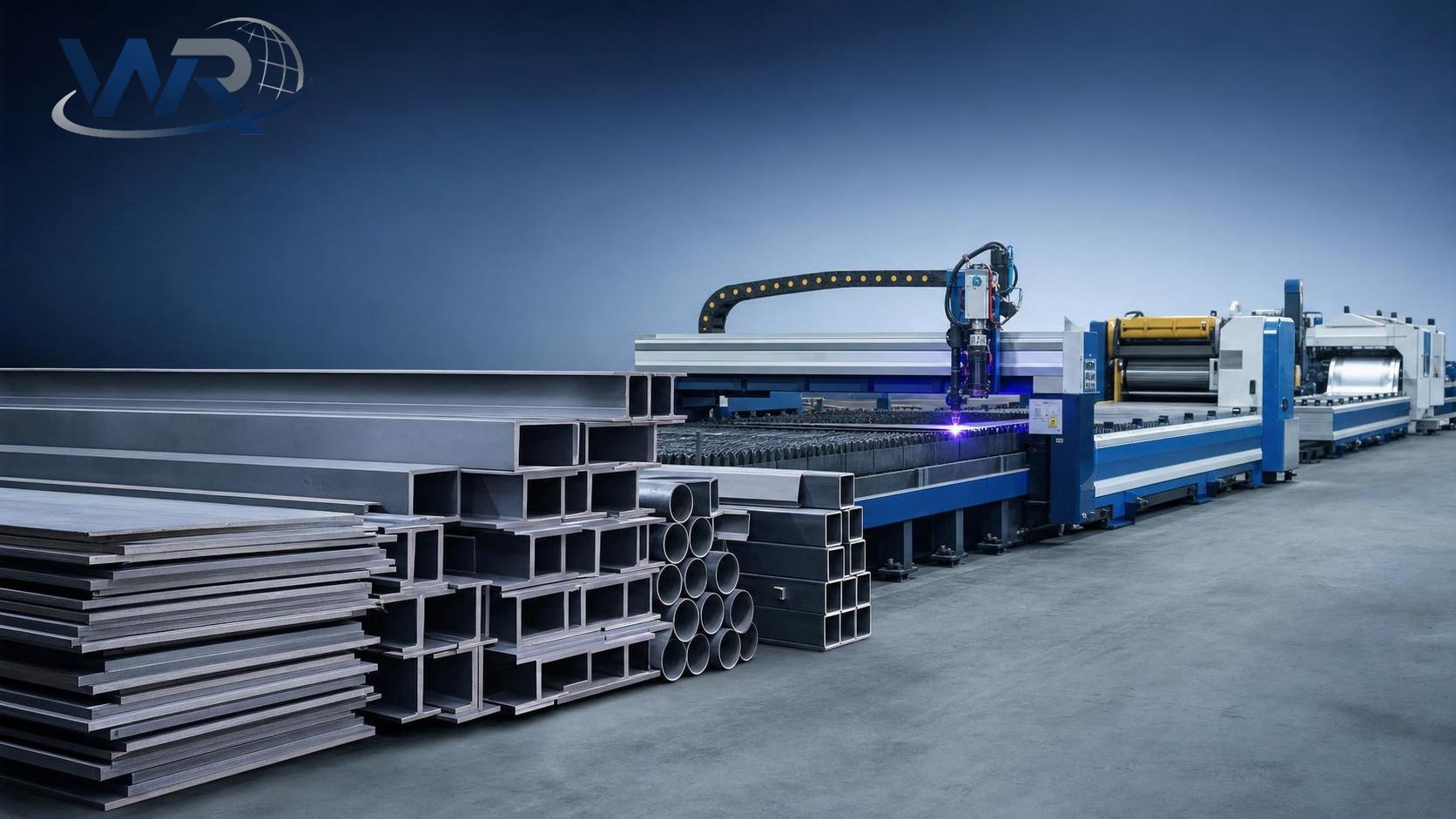
When Custom Steel Processing Reduces Waste and Rework
For projects under constant pressure, material mistakes quickly become schedule problems.
A wrong cut, uneven plate, or mismatched section often leads to scrap, site delays, and repeated labor.
That is why Custom Steel Processing matters more than many procurement plans first assume.
Instead of buying standard stock and modifying it on site, teams can receive steel closer to final use.
This approach reduces waste at the source and improves installation efficiency across construction and industrial work.
In practical terms, Custom Steel Processing supports better fit-up, cleaner planning, and fewer costly surprises.
It also helps procurement align steel sections, plates, and pipes with exact project drawings before shipment.
For teams managing multiple trades and strict milestones, that difference becomes visible very quickly.
Why Waste and Rework Keep Happening
Material waste usually does not start at installation.
It often begins earlier, during specification gaps, rushed purchasing, or inconsistent processing quality.
Standard stock can work well for basic jobs, but complex projects rarely stay within basic conditions.
As layouts tighten, tolerance expectations rise, and site labor gets more expensive, rough adjustments become inefficient.
A beam cut too long affects surrounding components.
A plate that needs extra leveling slows welding and alignment.
A pipe prepared without project-specific ends can trigger repeated handling.
Each issue seems small in isolation.
Together, they consume time, add hidden cost, and disrupt downstream crews.
Custom Steel Processing addresses these losses before they reach the jobsite.
How Custom Steel Processing Changes the Workflow
The real value is not only precision.
It is the shift from reactive correction to planned execution.
With Custom Steel Processing, cutting, leveling, sizing, and preparation happen under controlled factory conditions.
That makes output more repeatable than ad hoc field modification.
It also allows purchasing teams to order by actual application need, not rough overage assumptions.
- Steel sections arrive cut to planned lengths.
- Plates can be CNC cut for cleaner fit and lower scrap.
- Precision leveling improves flatness before fabrication starts.
- Pipes can be prepared for faster assembly and connection.
This also means fewer temporary decisions on site.
And fewer temporary decisions usually lead to fewer permanent mistakes.
Where the Savings Actually Come From
Cost savings from Custom Steel Processing are often broader than material price alone.
The most obvious gain is lower scrap volume.
When material matches the drawing more closely, excess cutting and discarded offcuts drop.
But another major gain comes from labor efficiency.
Crews spend less time measuring, trimming, repositioning, and reworking around bad fit.
Equipment usage also becomes more predictable.
Cranes, welders, and installation teams are not left waiting on avoidable material corrections.
In short, Custom Steel Processing helps protect both the budget and the sequence of work.
Best-Fit Project Scenarios
Not every job needs the same level of processing.
However, some scenarios clearly benefit from Custom Steel Processing.
- Industrial plants with dense piping and structural coordination.
- Commercial buildings where installation windows are tight.
- Infrastructure projects requiring stable repeatability across batches.
- Export projects needing predictable packaging and delivery planning.
- Urgent replenishment orders where field rework would cause major delay.
These cases share one thing.
The cost of poor fit is much higher than the cost of better preparation.
That is where Custom Steel Processing becomes a practical solution, not an optional extra.
What to Check Before Placing a Custom Order
Good results depend on more than equipment.
The handoff between project data and factory execution must be clear.
Before confirming Custom Steel Processing, review these points carefully.
- Confirm exact dimensions, tolerances, and material grades.
- Align drawings, revision history, and batch priorities.
- Define which steps are factory processed and which stay on site.
- Check delivery sequencing against installation milestones.
- Ask about stock capacity and lead time reliability.
This stage deserves attention because most rework is traceable to unclear inputs.
When documentation is accurate, Custom Steel Processing delivers stronger results and smoother receiving procedures.
Why Manufacturing Capacity Matters
Processing capability only works if supply stability supports it.
That is especially true when projects require both standard stock and custom output.
Shandong Wanruitong Steel Co., Ltd. operates as a local original steel manufacturer in Shandong, China.
Its production covers steel sections, plates, pipes, construction steel, and mainstream specifications.
The factory occupies 32,000 square meters and runs 8 automatic rolling and deep processing lines.
It also includes CNC cutting, precision leveling, and related professional facilities.
Annual comprehensive output reaches 550,000 tons, supporting both bulk procurement and urgent replenishment needs.
For standard specifications, 10,000 tons of ready stock support delivery within 7 working days.
For Custom Steel Processing orders, stable delivery is typically maintained within 15 to 25 days.
That balance between stock depth and scheduling maturity is important for real project control.
A Practical Way to Reduce Risk
The case for Custom Steel Processing is straightforward.
When steel is prepared closer to final application, waste drops and rework becomes easier to prevent.
That improves budget discipline, site productivity, and delivery confidence at the same time.
More importantly, it helps teams move from correction-based execution to better upfront control.
For projects with demanding timelines, tight tolerances, or mixed material requirements, Custom Steel Processing is a practical decision.
Start with accurate drawings, clear batch priorities, and a manufacturer that can combine processing precision with dependable delivery.
Related Posts
- ▶ Carbon Steel Pipe Standards Explained: ASTM, API, and Common Gaps
- ▶ How to Judge Steel Plates by Flatness, Tolerance, and Surface Quality
- ▶ Steel Pipes for Water, Gas, and Fire Systems: Key Differences
- ▶ Reinforcing Steel Bar Mistakes That Lead to Site Delays
- ▶ One-Stop Steel Distribution or Multi-Supplier Buying: Cost and Risk
- ▶ Steel Sections vs Plate Fabrication: Which Is More Efficient?
Send Us A Message